





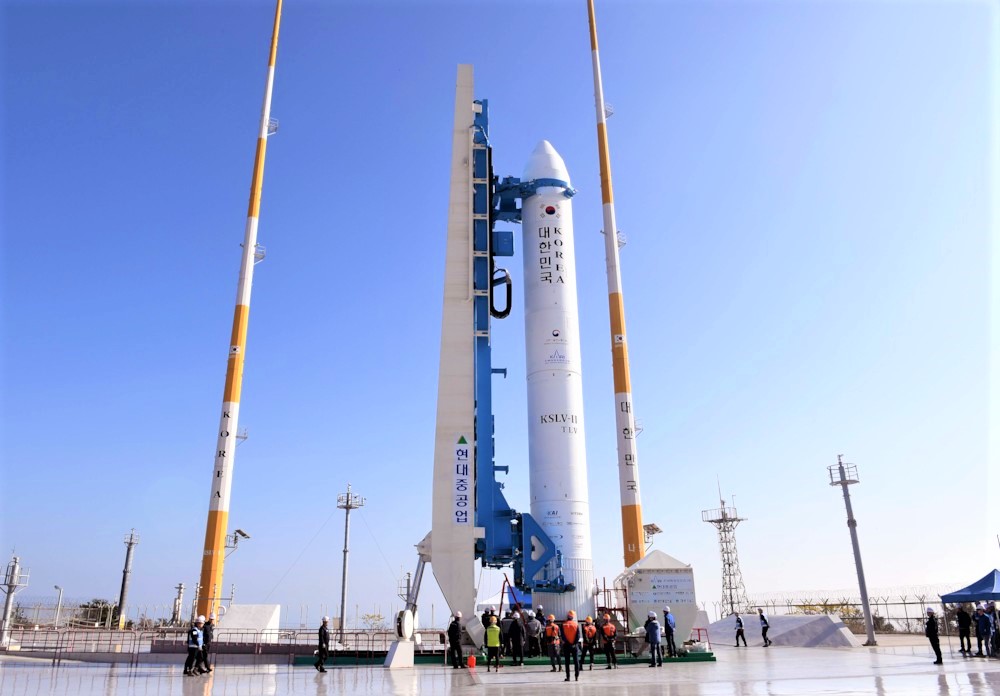
South Korea Nuri rocket has successfully launched, deploying 15 satellites into orbit. This milestone showcases the nation’s growing capabilities in space technology.
Overview of the Nuri rocket launch
On a significant day for space exploration, South Korea successfully launched its Nuri rocket, marking a remarkable achievement in its space program. The launch took place from the Naro Space Center, showcasing the nation’s growing capabilities in satellite deployment.
The Nuri rocket, also known as the Korea Space Launch Vehicle-II, is designed to carry payloads of up to 1.5 tons into low Earth orbit. During this launch, it successfully delivered 15 satellites, demonstrating its reliability and efficiency. This marks the second mission for the Nuri rocket, following its maiden voyage, which laid the groundwork for future advancements in South Korean space technology.
With this successful launch, South Korea aims to enhance its presence in the global space arena, contributing to scientific research and technological development. The Nuri rocket exemplifies the nation’s commitment to strengthening its aerospace capabilities.
Significance of the satellite deployment
The recent deployment of 15 satellites by the South Korea Nuri rocket marks a significant milestone in the country’s space program. This successful launch demonstrates South Korea’s growing capabilities in space technology and satellite deployment.
The significance of this event can be summarized as follows:
- Technological Advancement: The Nuri rocket showcases South Korea’s ability to develop and operate advanced aerospace technologies.
- Economic Growth: Satellite deployment fosters opportunities for commercial ventures, enhancing the national economy.
- Global Positioning: Successfully launching multiple satellites positions South Korea as a competitive player in the global space sector.
- Scientific Research: The satellites will contribute to various scientific studies, benefiting areas like environmental monitoring and disaster management.
Through the success of the Nuri rocket, South Korea is solidifying its reputation as an emerging space power.
Key features of the Nuri rocket
The Nuri rocket, part of South Korea’s ambitious space program, boasts several key features that contribute to its success. These include:
- Three-stage design: The Nuri rocket utilizes a three-stage launch system, allowing for efficient propulsion and payload delivery.
- Payload capacity: With the ability to carry up to 1.5 tons into low Earth orbit, the Nuri rocket is designed to support various satellite missions.
- Domestic technology: The development of the Nuri rocket showcases South Korea’s advancements in aerospace technology, relying heavily on local components and expertise.
- Environmental considerations: The rocket is engineered to minimize its environmental impact during launches, aligning with global sustainability goals.
These features make the South Korea Nuri rocket not only a technical achievement but also a vital asset for future space exploration and satellite deployment initiatives.
Impact on South Korea’s space program
The successful launch of the South Korea Nuri rocket marks a significant milestone in the nation’s space program. This achievement not only enhances South Korea’s reputation in the global aerospace community but also strengthens its ambition to develop a more robust space exploration strategy.
As a result of this success, several key impacts can be anticipated:
- Increased Investment: The triumph of the Nuri rocket is likely to attract more funding and investment in the space sector, facilitating further advancements.
- International Collaboration: South Korea’s growing capabilities may lead to partnerships with other countries, fostering innovation and shared research initiatives.
- Technological Development: The experience gained from the Nuri rocket can be leveraged to enhance local technology, benefiting various industries.
- Public Interest: The success of the launch could inspire a new generation of engineers and scientists, invigorating interest in STEM fields.
Future missions planned by South Korea
As South Korea continues to advance its space capabilities, several future missions are planned following the successful deployment of the Nuri rocket. These upcoming launches aim to expand the nation’s presence in space and enhance its technological expertise.
Key objectives for future missions include:
- Increased satellite deployment: South Korea plans to launch additional satellites to improve its Earth observation capabilities and gather crucial data for various sectors.
- International collaborations: The country seeks partnerships with other nations to jointly develop and launch satellites, fostering a collaborative approach to space exploration.
- Testing new technologies: Future missions will incorporate advanced technologies that can enhance the efficiency and reliability of the Nuri rocket.
- Deep space exploration: Ambitions include potential missions targeting the Moon and beyond, showcasing South Korea’s growing aspirations in the realm of space travel.
With the Nuri rocket as a cornerstone of its space program, South Korea is poised for an exciting era of exploration and discovery.
International reactions to the launch
The successful launch of the South Korea Nuri rocket has garnered significant attention and positive reactions from the international community.
Experts and officials from various countries have praised South Korea’s advancements in aerospace technology. Key reactions include:
- United States: NASA representatives expressed admiration for the Nuri rocket’s capabilities, highlighting its potential for future collaborative missions.
- Europe: The European Space Agency noted the successful deployment of satellites as a testament to South Korea’s growing role in global space exploration.
- Japan: Officials acknowledged the achievement, viewing it as an opportunity for regional cooperation in space endeavors.
- China: State media reported on the launch, reflecting the competitive nature of the space race in Asia.
Overall, the launch of the South Korea Nuri rocket is seen as a significant milestone in the nation’s space ambitions.
Conclusion on the success of the Nuri rocket
The successful launch of the South Korea Nuri rocket marks a significant milestone in the country’s ambitions for space exploration. With its ability to deploy multiple satellites into orbit, the Nuri rocket has demonstrated not only technical proficiency but also the potential for future advancements in space technology.
This achievement has reinforced South Korea’s commitment to expanding its presence in the global space arena. As the nation prepares for upcoming missions, the success of the Nuri rocket lays a solid foundation for future endeavors, including potential collaborations with international space agencies.
In summary, the Nuri rocket’s launch has proven to be a pivotal moment for South Korea, showcasing its capability to contribute to space exploration. This success is expected to inspire further innovations and propel the nation’s aspirations to become a key player in the field of space technology.
The South Korea Nuri rocket has successfully demonstrated its capabilities with multiple satellite deployments. As a result, the South Korea Nuri rocket is paving the way for future advancements in the nation’s space exploration efforts.
By Kiyoen569 via Openverse